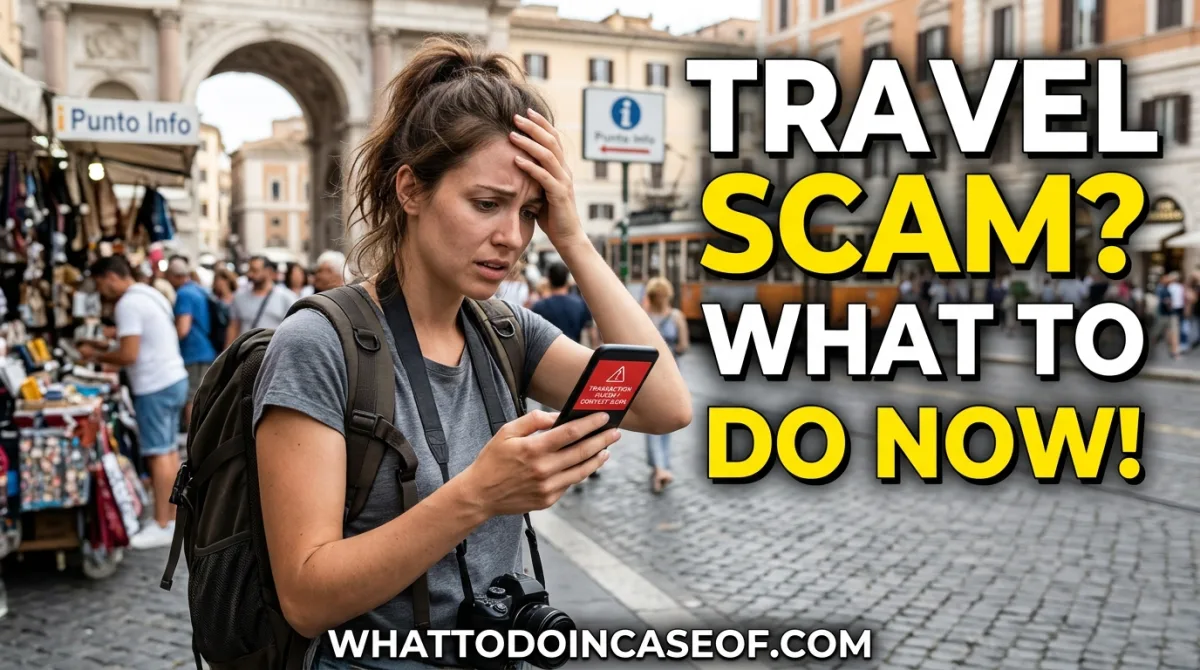
The moment you pat your pocket and feel nothing is pure dread. Your passport is gone — in a foreign country, possibly miles from your hotel, and your flight home is days away. Your heart races, your mind blanks, and every worst-case scenario starts playing at once.
Here's the truth: losing your passport abroad is scary, but it's also a solvable problem. Thousands of travellers go through this every year, and consulates have a streamlined process for exactly this emergency. The key is knowing the right order of operations and avoiding the panic-driven mistakes that turn a bad day into a disaster.
Why Losing Your Passport Feels Worse Than It Is
A lost passport isn't just an inconvenience — it's your identity, your visa, and your ticket home all in one small booklet. Without it, you can't check into hotels in many countries, you can't board a flight, and you're technically in violation of local immigration rules.
What makes it worse is the feeling of vulnerability. You're in a place where you don't speak the language fluently, you don't know the emergency numbers, and you have no idea how long the replacement process takes. That uncertainty is what turns a solvable problem into a panic attack.
But here's what most people don't realise: embassies and consulates deal with lost passports every single day. It's routine for them. You're not the first person to lose a passport in Paris, Bangkok, or Buenos Aires — and you won't be the last.
How Passports Actually Get Lost
Most lost passports don't get stolen by pickpockets in dramatic street scenes. They get lost in mundane ways. You leave it at the hotel reception and don't notice until you're at the airport. It slips out of your bag at a café. You pack it in a checked bag that gets delayed. You put it in a "safe place" in your accommodation and genuinely cannot remember where that safe place was.
The most common scenario is simpler than you'd think: you used your passport to check into a hotel, then stuffed it into a different pocket or bag compartment than usual. Your autopilot brain assumed it was where you always keep it. It wasn't.
What Are Your Options When Your Passport Goes Missing?
You have a few paths forward, and the right one depends on your specific situation — where you are, how soon you fly, and whether your passport is truly gone or just misplaced.
Option 1: Retrace Your Steps and Search Thoroughly
This sounds obvious, but it's the step most people skip in their rush to report the loss. Before you contact any embassy, spend at least an hour methodically checking everywhere.
Look through every bag pocket, every jacket pocket, the bottom of your suitcase, and between mattress layers at your accommodation. Call the last few places you visited — restaurants, shops, transport hubs. If you took any taxis or rideshares, contact the driver through the app.
The advantage here is clear: finding your passport costs nothing and takes minutes. The disadvantage is that time spent searching delays the official process, so set yourself a strict limit. One hour of focused searching, then move on.
Option 2: Report the Loss to Local Police
In most countries, you'll need a police report before you can get an emergency passport. This serves two purposes: it creates an official record for your embassy, and it protects you if someone tries to use your passport fraudulently.
Go to the nearest police station with a copy of your passport if you have one (you did make copies, right?). Ask for a written report — not just a verbal acknowledgement. You'll need this document for your embassy appointment.
The downside is that police stations abroad can be time-consuming. In some countries, you'll be processed quickly; in others, you might wait hours. Bring your phone charger and patience.
Option 3: Contact Your Embassy or Consulate
This is the step everyone knows about, but few understand how it actually works. Your embassy can issue an emergency passport — usually valid for one year or less — that lets you travel home or to your next destination.
You'll need to appear in person, bring identification (a driver's licence, national ID card, or even a photocopy of your lost passport helps), provide your police report, fill out forms, and pay a fee. The fee varies by country but typically ranges from $100–$200 for an emergency passport. Some consulates can process this same day; others take a few days.
The emergency passport is a temporary document. Once you're home, you'll need to apply for a full replacement through your home country's passport office.
Option 4: Check If Your Country Has an Online Reporting System
Many countries now let you report a lost or stolen passport online, which flags it in the system and prevents fraudulent use. This doesn't replace the in-person consulate visit, but it's a smart first step.
For example, the US State Department and the UK Passport Office both have online reporting tools. If you report your passport lost online, it becomes invalid immediately — which is good for security but means you definitely can't find it and use it later.
This is worth doing while you're waiting for a police report or embassy appointment, but only once you're certain the passport is truly gone.
Which Option Is Right for You?
The honest answer is that you'll likely need all three official steps: report it to police, inform your embassy, and get an emergency passport. The order matters less than starting quickly.
If your flight is tomorrow, contact your embassy first and ask about emergency same-day service. Many consulates prioritise travellers with imminent departures. If you have more time, the standard process of police report then embassy appointment works fine.
If you're in a country without a consulate from your home country, you'll need to contact the nearest one in a neighbouring country — which means travel arrangements on top of everything else. This is why travel insurance with emergency assistance coverage is worth every penny.
Your Step-by-Step Action Plan
- Stop and breathe. Panic makes you retrace steps poorly and miss obvious places. Take five minutes to calm down.
- Search thoroughly for one hour. Check every bag, pocket, and surface. Call the last three places you visited.
- Report it to local police. Ask for a written report. Keep it safe.
- Report it to your country's online system if one exists. This protects you from identity theft.
- Contact your embassy or consulate immediately. Explain your situation, including your flight date. Ask about emergency passports and fees.
- Gather identification. Dig up any secondary ID, passport copies, or digital photos of your passport page.
- Attend your consulate appointment with your police report, forms, and photos. Many consulates require passport-sized photos, so bring extras.
- Get your emergency passport and confirm it covers your travel plans, including any countries you're transiting through.
- Review your insurance coverage. Your travel insurance may cover emergency passport fees and replacement costs.
- Once home, apply for a full replacement passport — the emergency one is temporary.
The Mistakes That Make a Bad Situation Worse
Waiting too long to report it. Some people hope the passport will turn up and delay the official process. Report it lost or stolen within 24 hours. The fix: start the process immediately, even if you're still searching.
Not making copies or digital backups. A photocopy or a photo on your phone can dramatically speed up the replacement process. The fix: photograph your passport's main page and store it in a secure cloud folder before you travel.
Assuming the emergency passport is free. It isn't. Fees apply, and some embassies only take cash or specific payment methods. The fix: ask about payment options when you call.
Forgetting about visa requirements. Your emergency passport might not have the visa stamps your original passport had. The fix: check whether your destination countries require you to transfer visas or apply anew.
Losing your other documents too. Keeping your passport, wallet, and phone all in one bag means one theft wipes out everything. The fix: separate your valuables across different bags and pockets.
Panicking and cancelling your trip. An emergency passport is designed to get you home or to your next destination. The fix: trust the process and follow the steps above.
The One Thing to Remember
Your passport is replaceable. It's a bureaucratic document, not your identity. The system for replacing it abroad exists precisely because this happens to thousands of travellers every year — and it works.
The single most important thing you can do right now, before you ever travel, is to create a backup plan. Store a digital copy of your passport in a secure location. Save your embassy's phone number and address in your phone. Consider whether your travel insurance covers passport replacement. These five minutes of preparation can save you days of stress later.
And if you're in the early stages of planning a move abroad or an extended trip, use the free salary and cost-of-living calculator on our site to get a realistic picture of expenses — including the unexpected ones like replacing a lost passport. Pair that with our destination guides to understand local emergency protocols before you arrive.
Frequently Asked Questions
How long does it take to replace a lost passport abroad? Emergency passports can sometimes be issued the same day, but a more realistic expectation is one to three business days. If your situation isn't urgent, a full replacement could take several weeks through the standard process.
Can I travel home without a passport? No. You need a travel document to board international flights. An emergency passport from your embassy is the standard solution and is valid for returning to your home country.
What happens if I find my passport after reporting it lost? Once you report a passport lost or stolen, it becomes invalid in most countries' systems. You cannot legally use it for travel again. You'd need to keep the emergency passport and apply for a full replacement when you get home.
Do I need a police report to get an emergency passport? Most embassies require one, though some may waive this requirement in exceptional circumstances. Getting a police report is always a good idea anyway, as it protects you against identity fraud.
Will travel insurance pay for a lost passport? Many comprehensive travel insurance policies cover emergency passport fees and related expenses, but the coverage varies widely. Check your policy documents or contact your provider before you travel to confirm what's included.
Ready to act on what you just read? Check the free salary calculator to see how far your budget goes in this destination, compare a few shortlisted places side by side, or browse more travel guides for ideas.