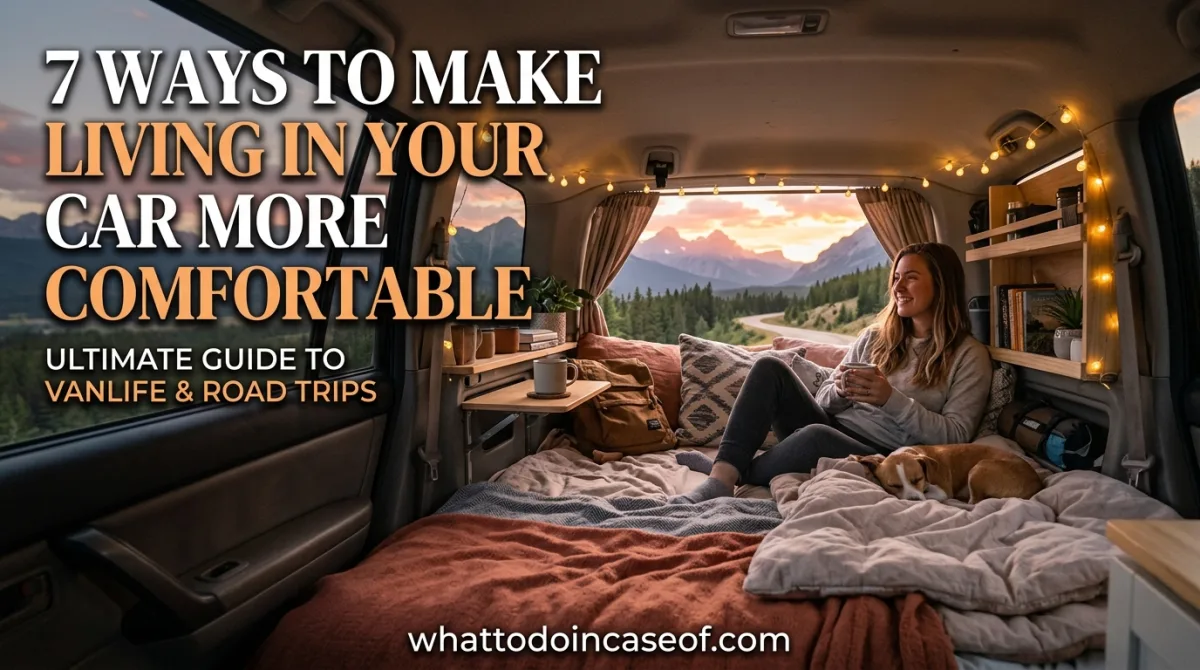
How to Turn Your Car Into a Comfortable Sleeping Space
Sleeping in your car doesn't have to feel like punishment. Done right, it's a legitimate way to cut accommodation costs to zero, wake up somewhere new, and keep your trip flexible. Done badly, it's a cramped night of shivering against a seatbelt buckle and swearing you'll never do it again.
This guide walks you through the whole setup, from measuring your space to building a flat sleeping platform, staying warm, and finding somewhere legal to park. Most people can get a basic, comfortable setup working in an afternoon and for well under a few hundred dollars, depending on what you already own. I'll flag where prices are rough estimates so you can check locally.
By the end you'll know exactly what to buy, what to skip, and how to sleep properly tonight.
What you need before you start
You don't need much, but a few things make the difference between "this is fine" and "never again."
- Your car, obviously, ideally with seats that fold flat or come out
- A tape measure and something to write on
- A sleeping pad or mattress cut to size (foam or inflatable)
- A sleeping bag rated for the temperatures you'll actually face
- Window coverings: reflectix, blackout fabric, or fitted shades
- A headlamp or small rechargeable light
- A small storage bin or two for clothes and gear
- Two litres of water and a way to pee at night (more on this later)
Optional but genuinely useful: a 12V fan, a power bank, and a cheap sunshade for the windscreen. Skip the fancy branded gear until you've slept in the car once. You'll learn what you actually need.
Step 1: Measure your sleeping space
Fold the rear seats down, or remove them if that's possible on your model, and get in with the tape measure. You want the length from the back of the front seats to the tailgate, and the width at the narrowest point, usually between the wheel arches.
Why this matters: almost every comfortable car camping setup starts with a flat surface of a known size. Guessing leads to a mattress that doesn't fit or, worse, one that does fit but leaves you no room to turn over.
Tip: Lie down in the empty space before you buy anything. Ten minutes of discomfort now saves you a wasted purchase. If you're shorter than the space, great. If you're not, you'll need either a platform that extends over the folded front seats or a car with a longer cargo area.
Time needed: 15 minutes. Cost: free.
Step 2: Decide on your sleeping surface
There are three realistic options. A self-inflating or closed-cell foam pad is the cheapest and most durable, and it won't puncture. An air mattress is plusher but colder and prone to leaks. A cut-to-size foam block (often sold as upholstery foam) is the sweet spot for most people: cheap, warm, and you can trim it to your exact dimensions.
Why this matters: the floor of a car is hard and often uneven. A proper pad insulates you from cold coming up through the metal and smooths out the bumps.
Tip: If you go the foam route, aim for 5-10cm (2-4 inches) of thickness. A high-density foam lasts far longer than the soft stuff. Expect to pay roughly $30-$100 (estimate) for a cut piece, depending on size and where you buy it. Verify prices locally.
Step 3: Build a flat platform if your seats don't fold flat
Many cars have a frustrating hump or a step where the seats fold. The fix is a simple plywood platform. Cut a sheet to the width of your cargo area, add short legs or stacked crates underneath to bring it level with the folded seats, and you've got a flat bed.
Why this matters: a flat surface is the single biggest upgrade to comfort. It also creates storage space underneath, which is huge in a small car.
Tip: You don't need carpentry skills. A hardware store will often cut plywood to size for a small fee. Use plastic storage crates as the legs, since they double as drawers. This is the one step where a friend with a drill makes life easier.
Time needed: 1-3 hours. Cost: roughly $40-$120 (estimate) for wood and hardware.
Step 4: Sort out ventilation and window coverings
Crack the windows slightly and cover them. Reflectix cut to shape works well and is cheap. Blackout fabric with suction cups is less fiddly. For the windscreen, a standard sunshade does the job.
Why this matters: two reasons. First, condensation. Your breath will fog up every window overnight, and in cold weather that turns to ice on the inside. Second, privacy and stealth. Covered windows mean you sleep better and attract less attention.
Tip: Leave one window cracked by a centimetre, ideally under a wind deflector so rain can't get in. If you're somewhere buggy, a magnetic mesh screen over the opening is worth the small cost. A small 12V fan moves air and dramatically reduces condensation.
Step 5: Get your bedding right for the temperature
This is where people get it wrong. A sleeping bag rated for summer will leave you miserable in a cold snap. Check the comfort rating, not the "extreme" rating, which is basically a survival figure.
Why this matters: cold is the number one reason people abandon car camping after one night. Warmth is not optional.
Tip: Layer. A sleeping bag plus a blanket plus warm socks beats one expensive bag. Wear a hat. And remember that a foam pad underneath you matters as much as what's on top, since you lose a lot of heat downward. If you're travelling in genuine winter conditions, look at a proper four-season bag and verify the temperature rating before you buy.
Step 6: Organise your gear so you can actually move
In a small space, chaos equals misery. Use the storage under your platform, a bin behind the driver's seat, and a small bag for the things you need at night: phone, water, headlamp, tissues.
Why this matters: if you have to move three bags every time you want to reach something, you'll resent the whole setup.
Tip: Pack for the car, not for the trip. Keep the sleeping area clear at all times and treat everything else as cargo. A simple rule: if it doesn't fit under the platform or in one bin, it doesn't come.
Step 7: Plan where you'll actually park
This is the part nobody talks about enough. You need somewhere legal, safe, and quiet. Options include designated campsites, some truck stops, certain rest areas, and, in some countries, specific apps and networks that list overnight spots. Rules vary enormously by country and even by region, so check locally before you assume.
Why this matters: a knock on the window at 2am ruins the night, and in some places it comes with a fine.
Tip: Arrive late and leave early, keep the car tidy, don't cook with the doors open in a residential area, and never park somewhere that feels off. If you're planning a longer trip and weighing up where to base yourself, our destinations explorer is a good starting point for figuring out which regions actually suit this kind of travel.
Pro tips
A few things you only learn after a few nights in a car.
- Pee bottle or a plan. Getting up in the cold at 3am is brutal. Have a designated container or know where the nearest toilet is. This is not glamorous, but it's the difference between a good night and a bad one.
- Park facing slightly downhill if you can. It stops you rolling into the tailgate and helps if you need to level the car.
- Crack a window even when it's cold. Condensation is worse than a bit of chill.
- Test your setup in your driveway first. One night at home reveals every problem before you're 500km from anywhere.
- Keep a pee-and-go bag ready with headlamp, shoes, and a jacket so you're not fumbling in the dark.
- If you're budgeting a longer trip, run your numbers through the free salary and cost-of-living calculator to see how far your money stretches in different places. Car camping slashes accommodation costs, but fuel, food, and campsite fees still add up.
Common pitfalls
These are the mistakes that send people back to hotels.
Buying gear before measuring. You end up with a mattress that doesn't fit or a platform that's the wrong size. Measure first, buy second.
Underestimating the cold. A three-season bag in a car in spring can be genuinely uncomfortable. Over-prepare on warmth, especially for your first few trips.
Ignoring condensation. If you don't ventilate, you'll wake up in a damp car with fogged windows. Crack a window and use a fan.
Parking somewhere illegal or unwelcoming. Research local rules. What's fine in one country is a fine in another. Verify before you sleep.
Overpacking. A car is not a van. Every extra bag costs you comfort. Be ruthless.
Useful resources
You don't need much, but a few generic tools help. Park4Night and iOverlander are well-known apps for finding overnight spots, though listings vary in quality, so read recent reviews. Google Maps satellite view is surprisingly good for scouting a spot before you arrive. For weather, check a reliable forecast service and pay attention to overnight lows, not daytime highs. And if you're planning a longer route, our travel blog has more practical guides on budget travel and picking where to go.
FAQ
Is it legal to sleep in my car? It depends entirely on where you are. Some countries and regions allow it in certain places, others ban it outright, and many are ambiguous. Check local rules before your trip and never assume. When in doubt, use a designated campsite.
How do I stop the windows fogging up? Crack a window, use a small fan, and cover the glass. Ventilation is the fix, not more blankets.
What's the cheapest comfortable setup? A cut-to-size foam pad, a decent sleeping bag, and Reflectix window covers. You can put this together for well under $150 (estimate) if you shop sensibly.
Can I do this in winter? Yes, but it's a different game. You need a properly rated bag, insulation underneath, and a way to stay dry. Test it somewhere safe before committing to a cold-weather trip.
How do I stay safe? Park somewhere legal and well-lit, trust your instincts, keep your doors locked, and tell someone where you are. If a spot feels wrong, move.
Final word
Car camping rewards preparation and punishes improvisation, but the barrier to entry is low. Measure your space, get a flat surface, sort your warmth and ventilation, and you're most of the way there. Your first night might not be perfect. The second one will be better. By the third, you'll wonder why you ever paid for a hotel room you barely used. Get out there.